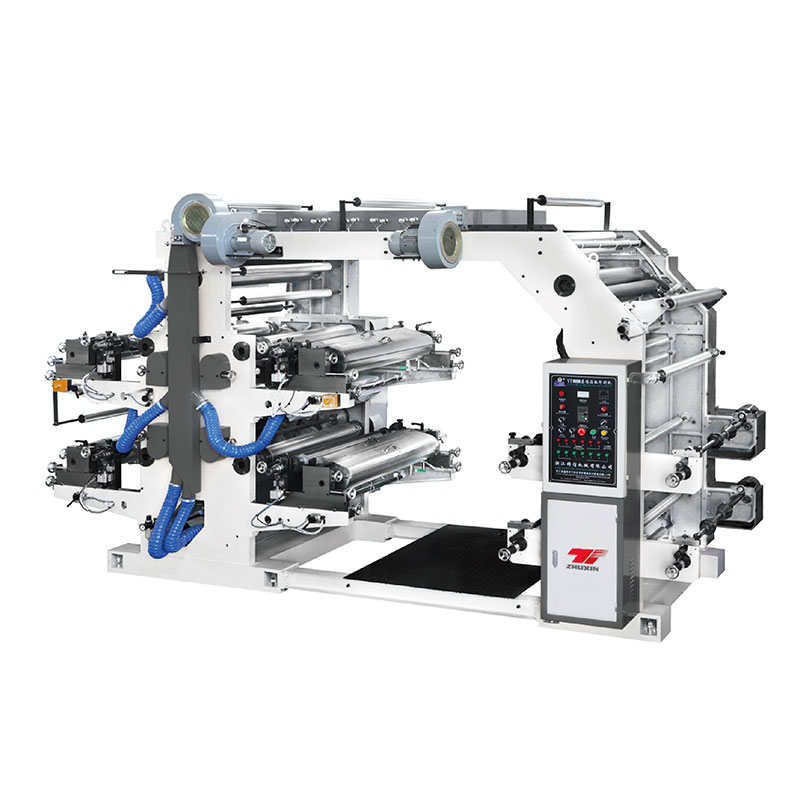
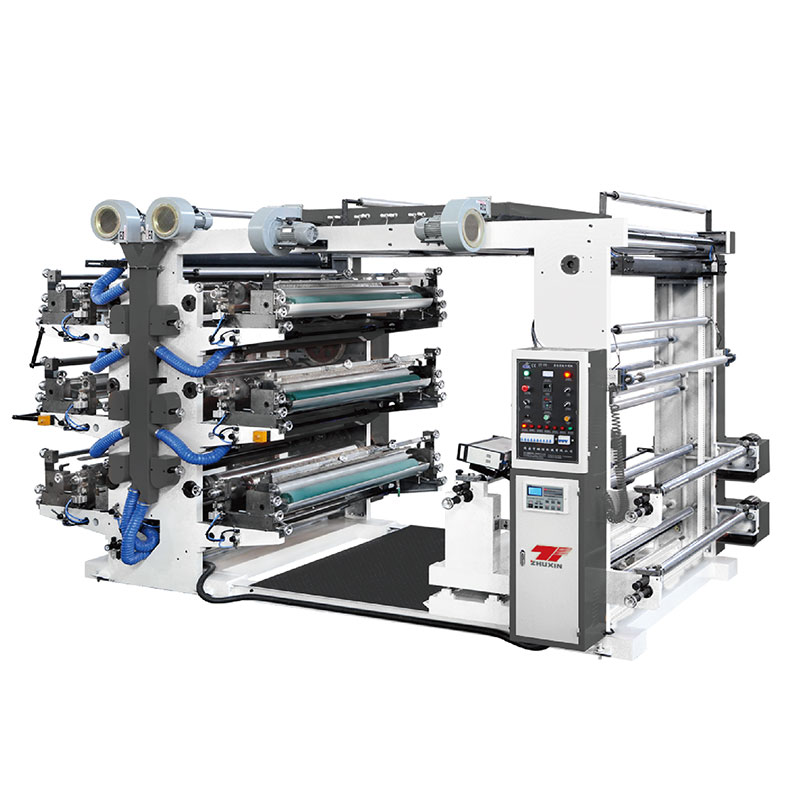
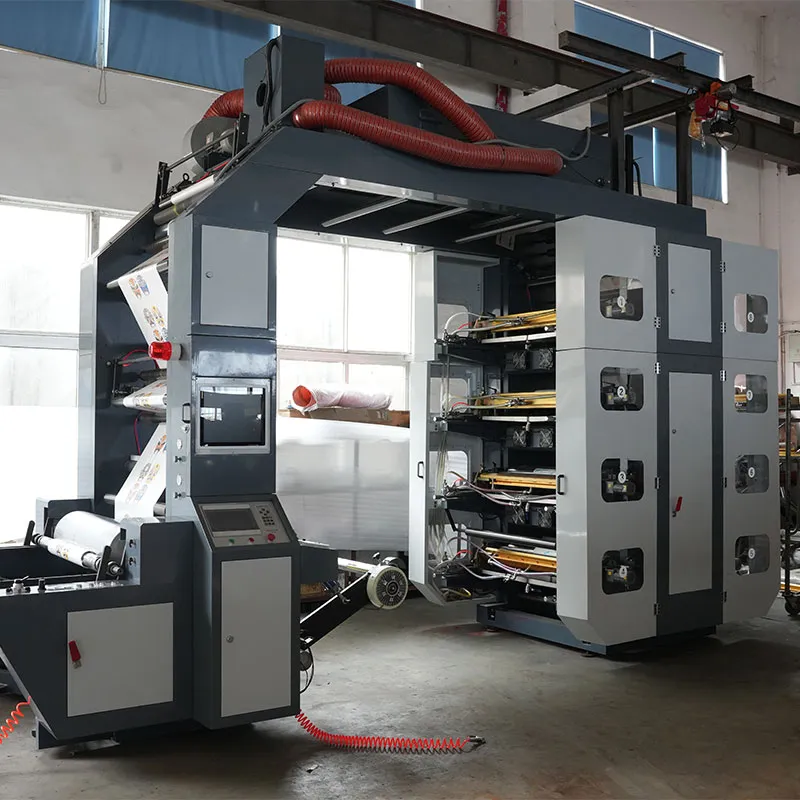
1. We use high-precision synchronous belt drive. It’s quieter than chain-driven printers and runs smoothly. When starting or stopping, speed changes don’t mess up the color alignment—something cheaper multi-color printers struggle with. We tested it against others, and it’s more accurate for detailed prints.
2. Feeding and winding are controlled by dual hydraulic and pneumatic systems, plus a friction winder. Customers often complain about loose rolls after multi-color printing; this setup fixes that. Finished rolls are tight and even, making them easier to use later.
3. The unwinding part has EPC (edge position control) auto-correction and hydraulic operation. No more manual lifting or constant adjustments. Customers say this saves at least one worker’s time each shift.
4. The main unit has a frequency converter for stepless speed control. It’s energy-saving, runs steadily, and you can adjust speed between 8-100m/min—good for small batches or full production.
5. The printing plate lifts hydraulically, so changing plates is easier than doing it manually. We use helical gears for the plate roller; they wear slower, so the machine lasts longer. Downtime is costly, so durability matters.
6. There’s a pre-start alarm. It alerts operators to problems before the machine starts, which helps avoid expensive damage or accidents. We added this because customers asked for more safety features.
7. Dual blowing and heating systems come standard, with constant temperature control. You can adjust the heat based on ink and material—thinner films need less heat, thicker paper more. This keeps ink drying fast and even, no smudges.
8. The bottom roller is made of special steel, treated with our own process, and electroplated with a 10-wire-thick hard chrome layer. It’s wear-resistant and handles pressure well—stays flat even after years of use.
9. Aluminum alloy guide wheels go through hard oxidation and balance treatment. This reduces friction on materials, so no more shifting that ruins rolls. It also makes the wheels last longer.
10. We added a cold air bellows to cool prints fast after drying. This stops ink from sticking or fading, which improves the qualified rate. Our tests showed it cuts waste by about 5%.
11. The operation interface is simple—new operators can learn it quickly. The machine’s structure is easy to maintain. It’s built for long, busy days, which is what most packaging factories need.
12. Prints come out sharp, with bright colors and good layering. It works with common materials: PE, PP film, paper, woven bags, non-wovens. Compared to our 6-color model, it has more color depth without slowing down.

 English
 Español
 Pусский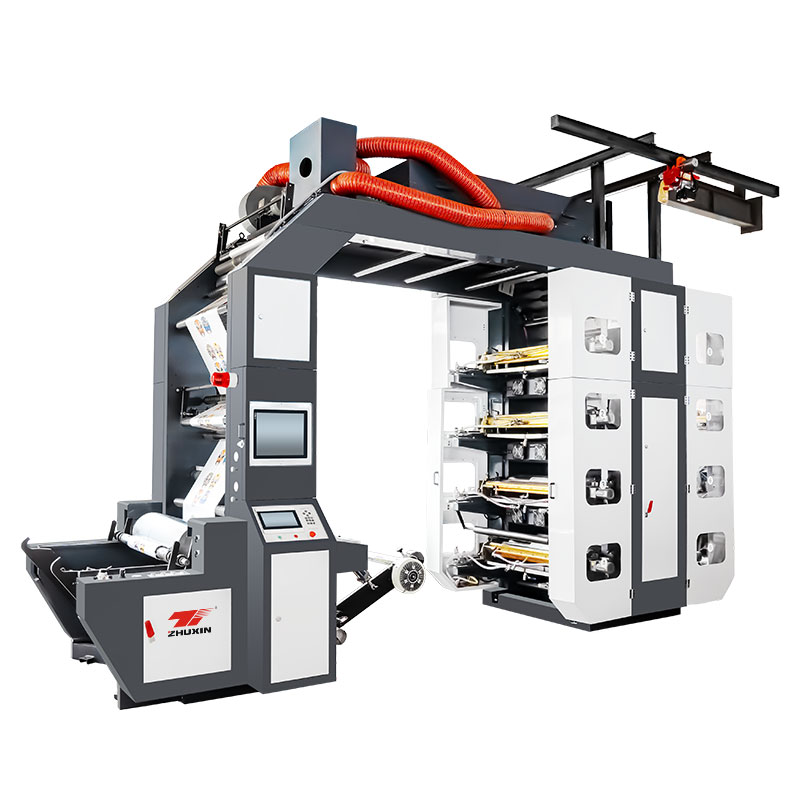

 product video

 Inquiry Now