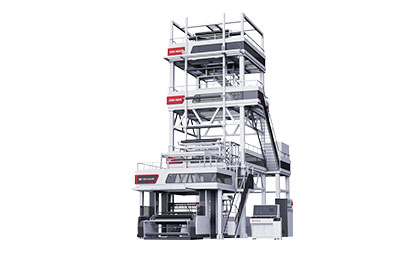
You're running a production shift, and the output meter is telling a story you don't want to hear: fewer kilograms per hour than yesterday, lower than the target, lower than what you know the machine can do.
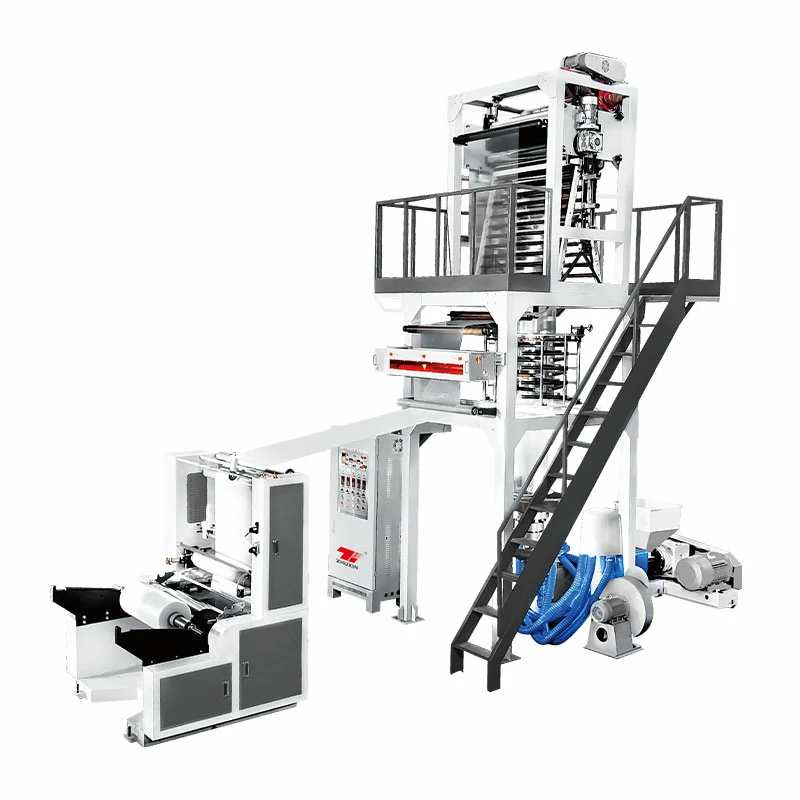
A MONO Film Blowing Machine is designed for reliable, industrial-grade production of garbage bags and wrap-around films, with maximum outputs of 70kg/hr for HD and 100kg/hr for LD. But when output drops, it's rarely a single cause. More often, it's a combination of factors that accumulate over time—screw wear, screen clogging, cooling limits, or resin changes.
This guide walks you through a systematic troubleshooting sequence, from the hopper to the winder, to help you identify the real bottleneck and get production back on track.
First – Is the Extruder Actually Running at Set Speed?
Before you look anywhere else, confirm that the extruder is delivering what the control panel says it's delivering.
Frequency Drive Mismatch
The inverter frequency display might show 50 Hz, but the actual screw speed could be lower. This happens when the drive parameters drift or when the motor isn't receiving the correct signal. Check the actual screw RPM with a tachometer and compare it to the setpoint. If they don't match, recalibrate the drive.
Belt or Gearbox Slippage
Worn belts or a slipping gearbox can reduce screw speed without triggering any alarm. Listen for squealing from the belt drive. Check the gearbox oil level and temperature—low oil or overheating can indicate internal friction that's robbing power. A machine running at φ65 screw diameter should deliver consistent output across shifts; any drop in screw speed directly reduces throughput.
Screw and Barrel Wear – The Silent Killer
Screw and barrel wear is the most overlooked cause of gradual output decline. It doesn't happen overnight, but it creeps up on you.
Increased Backflow, Lower Efficiency
As the screw flights wear and the barrel bore enlarges, melt leaks back past the flights instead of being pushed forward. This backflow increases with wear. At the same screw speed, the actual output drops. The machine still runs, but it runs slower.
How to Detect Wear
The telltale sign is a noticeable drop in melt pressure at the same screw speed. If your pressure gauge reads 20% lower than it did six months ago at the same RPM, you're losing output to wear. For machines running HD material at 70kg/hr max output, even a small efficiency loss cuts directly into your production target.
When to Act
Screw flight clearance should be checked every three years. If clearance exceeds 0.3mm for the feed section or 0.15mm for the metering section, it's time to consider repair or replacement. Even the best screw wears over time.
Screen Pack Clogging Without a Pressure Spike
A clogged screen pack usually shows up as high pressure—but not always.
Partial Blockage, Normal Pressure
When fine powder or gel particles slowly blind the screen, the pressure might not spike dramatically. Instead, the flow becomes restricted, and output drops. The melt pump is working harder, but the pressure reading stays within range because the restriction is gradual.
Temporary Fix – Reduce Change Interval
If you suspect screen clogging, shorten the screen change interval. Run a trial with fresh screens and see if output recovers. If it does, you've confirmed the problem. For machines running LD material at 100kg/hr max output, even a 10% flow restriction costs you 10kg/hr.
Long-Term Solution – Pre-Screen the Resin
The root cause is often contaminated resin. Install a magnetic separator or a sieve over the hopper inlet to catch fines before they reach the extruder. Clean resin means longer screen life and more consistent output.
Cooling Limit Mistaken for Extrusion Limit
Sometimes the extruder can push more material, but the cooling system can't handle it.
Bubble Instability
When the air ring can't remove heat fast enough, the bubble becomes unstable—it wobbles, flutters, or collapses. The operator's natural response is to slow down the extruder to stabilize the bubble. The machine's output drops, but the problem isn't the extruder; it's the cooling.
Check Fan Speed and Air Ring
Verify that the cooling fans are running at full speed. Check the air ring outlets for condensation or blockage. The integrated intelligent air-ring cooling system provides bubble stability control accuracy of ±0.5mm, but even the best air ring needs clean, unobstructed airflow.
Consider Internal Cooling
If you're consistently cooling-limited, consider adding internal bubble cooling (IBC). An IBC system can increase output by 20% or more by removing heat from inside the bubble. For a machine producing 100kg/hr, that's an extra 20kg/hr without changing the extruder.
Resin Change Without Reprogramming
Not all resins behave the same way. Changing material without adjusting parameters is a common cause of output loss.
MI Matters
A high-MI resin has lower melt viscosity and flows more easily—but it also allows more backflow past the screw flights. At the same screw speed, a high-MI resin may deliver less output than a low-MI resin. The machine handles both HD and LD materials, but each requires different screw speed settings for optimal output.
Build a Calibration Curve
For each resin you run, create a simple "RPM vs. Output" calibration curve. Run the machine at three different speeds, weigh the output for a fixed time, and plot the results. Keep these curves posted at the machine. When you change resins, you know exactly what output to expect at each speed.
Quick Reference – Low Output vs. Other Symptoms
| Symptom |
Priority Check |
| Normal motor current, low output |
Screen pack clogging |
| Low motor current, low output |
Screw/barrel wear or belt slipping |
| Bubble instability, low output |
Cooling system (air ring, fans, IBC) |
| Motor current high, low output |
Barrel heating issue or resin viscosity change |
| Intermittent output drops |
Vacuum hopper air leak or inconsistent feed |
Questions Operators and Supervisors Ask
Can running too cold cause low output?
Yes. If the barrel temperatures are too low, the melt viscosity increases, making it harder for the screw to push material forward. The motor draws more current, but output drops. Check your temperature profile against the resin manufacturer's recommendations. For HD materials, the melt temperature should be around 190-210°C; for LD, 160-190°C.
How to measure real output without a scale?
If you don't have a scale on the line, you can use the "cut and weigh" method. Cut a length of film from the winder, weigh it, and calculate the output per minute based on the line speed and film width. This gives you a quick check without interrupting production. For a typical machine with a 1200mm film width, a 10% drop in output shows up clearly in the weight-per-meter calculation.
Is there a way to restore worn screw performance?
Not without repair or replacement. Some shops attempt to build up worn screw flights with hard-facing weld, but this is a temporary fix at best. The proper solution is to send the screw to a specialist for re-building or replacement. Energy-saving screws are designed for long life, but when wear reaches the limit, replacement is the most cost-effective option.
When to Request an On-Site Audit
If you've worked through the checklist and output is still below target, it's time to bring in the experts.
Gather Your Data
Before you call, collect: the output drop percentage (current vs. target), the material you're running, the screw speed and melt pressure readings, and the date of the last major maintenance. This data helps the engineer diagnose remotely.
What to Expect
A technical audit typically includes screw and barrel condition assessment, temperature profile verification, and a full production trial with measurement. The goal is to identify whether the issue is wear, process, or a combination.
Zhuxin Machinery has been specializing in blown film technology since 1989, with over 2,000 successful cases worldwide. Their Single Screw Film Blowing Machine Pro Series features a German Standard precision transmission system delivering 80% energy saving and efficiency improvement. The machine is equipped with an energy-saving screw that consumes 18% less energy than industry standard, and the integrated intelligent air-ring cooling system provides bubble stability control accuracy of ±0.5mm. With average daily production capacity of 30 tons, the Pro Series is built for reliable, industrial-grade production of garbage bags and wrap-around films.
Low output on a MONO Film Blowing Machine is rarely a mystery once you know where to look. Start with the screw speed, check for wear, verify the screen pack, confirm the cooling system, and match your settings to the resin. Work through the list in order, and you'll find the bottleneck. When you need expert help, the manufacturer's technical team can provide remote diagnostics and on-site audits to get your production back to full capacity.
Ready to troubleshoot your mono-layer blown film line? Reach out to Zhuxin Machinery's technical team—they can provide screw condition assessment, process optimization guidance, and on-site audit support to get your output back on target.

 English
 Español
 Pусский